Why Hot Air Usually Fails Thick Composites (And What Actually Works)
If you’ve ever tried pushing thick composite fabrics through a Bruckner system using hot air, you know the frustration. It’s a nightmare. Here’s the problem: air is a terrible conductor. It’s basically an insulator. When that hot air hits your material, it just sits there on the surface, creating this stubborn “boundary layer.” It can’t get the heat to move into the core. You end up with the worst of both worlds—a scorched, ruined surface and a center that’s still ice cold.
Getting the Heat Inside
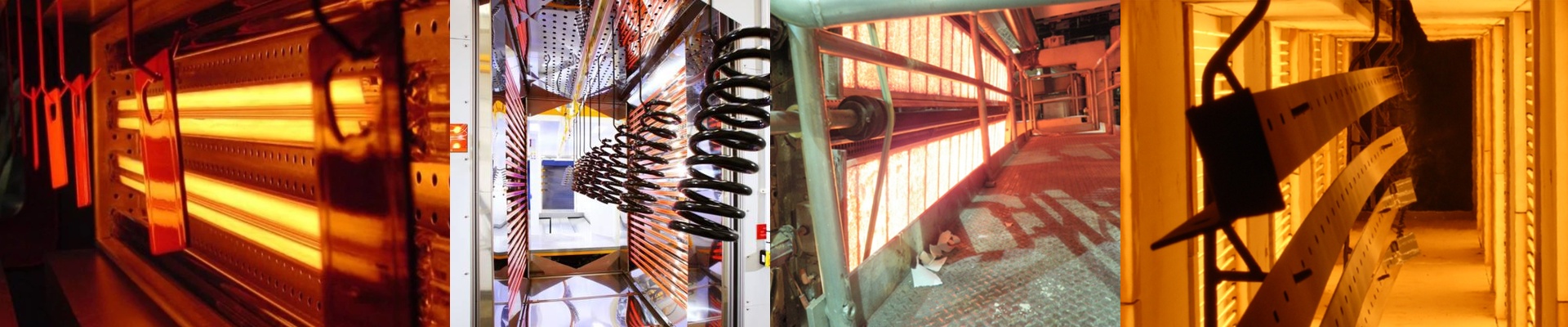
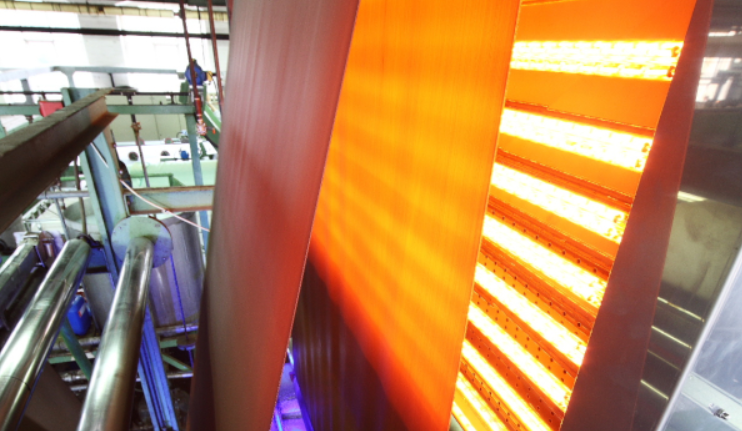
This is where Infrared (IR) changes the conversation. IR doesn’t need air to carry the heat. Instead, it uses electromagnetic waves that actually dive into the fabric. When those waves hit the molecules inside your composite at just the right frequency, the material absorbs that energy directly. Think of it as heating from the inside out. Instead of waiting for the heat to slowly crawl from the surface to the middle, the internal fibers just start getting hot on their own. It happens almost instantly.
The Struggle with “Mass”
When you rely on convection, you’re fighting a losing battle with temperature gradients. To get the middle of a thick piece of material up to temp, you have to crank the oven heat way up. But that’s a gamble. You’re risking melted fibers or weird shrinkage on the face of the fabric just to reach the core. IR skips that entire struggle. Because the radiation penetrates deep into the substrate, you get a steady, uniform temperature all the way through. No more overcooking the top just to fix the middle.
The Catch (Because there’s always one)
Now, IR isn’t some magic wand. It has its quirks. Everything depends on how your specific material absorbs the energy. If your fabric is too reflective—or if it’s “transparent” to the wavelength you’re using—the energy will just bounce off or pass right through without doing a thing. You have to make sure your lamp wavelength actually matches the absorption peak of your material. And a quick heads-up: IR lamps get incredibly hot in very small areas. If your reflectors and cooling fans aren’t dialed in perfectly, you’ll burn out the ends of your lamps before you know it.