


Introduction
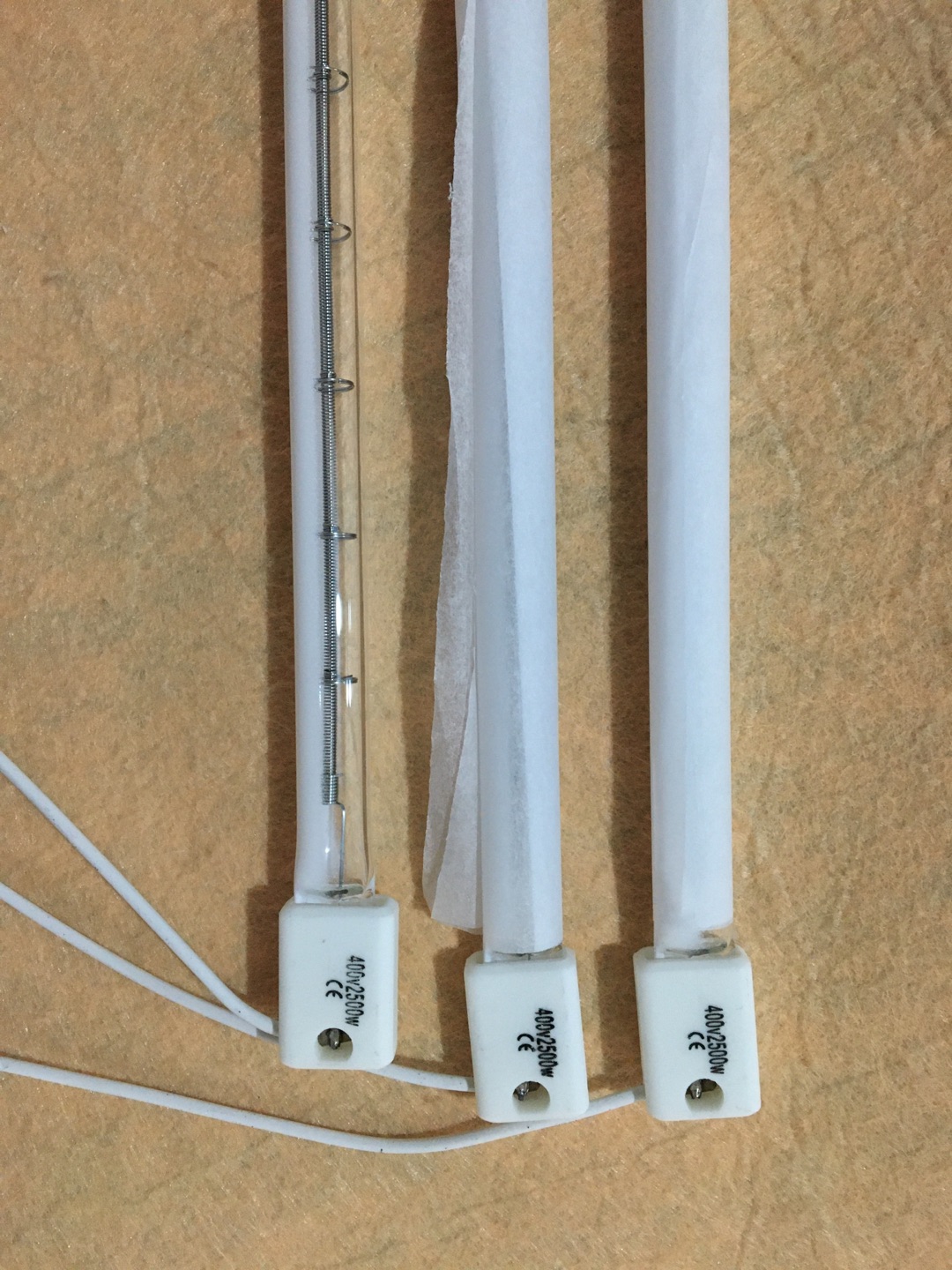
We built this quartz halogen heater lamp tube to be a seriously compact powerhouse—a high-intensity infrared heat source that gets straight to work. It’s for those industrial jobs where you need heat, fast, in a tight spot. When convection heating just can’t keep up, this tube steps in to deliver predictable, repeatable warmth without making you redesign the entire system.
Power, Voltage, and Size: Why It Matters
Here’s the thing about its guts: we packed a lot of power into a small space. These tubes run at 2500W to 3000W, and we chose 400V for a smart reason. It keeps the current lower for the same wattage, which means you can use smaller wiring and keep the terminals inside the fixture from getting too hot. Then there’s the 300mm length. It’s the kind of footprint that feels just right—long enough to cover a specific zone, but short enough to slip into tight equipment without forcing you to overhaul the whole machine bay. You get a ton of concentrated heat in a small package. But that also means the surrounding hardware has to be up to the task. With a 400V, 2500W tube throwing off that much heat, the socket, wiring, and any shielding need to be built for continuous high temperatures.
What It’s Made Of
The envelope is quartz, plain and simple, because it can handle intense heat and lets infrared light pass through with no problem. Inside, the halogen cycle keeps the filament clean, even when things get seriously hot. That’s what gives you stable output over the life of the lamp, and it’s why you won’t see the blackening that plagues standard incandescent bulbs. We went with R7s connectors for a reason. They give you a secure, two-contact connection that handles the current and makes the lamp a simple drop-in replacement. And the tube’s surface is treated to fine-tune the infrared spectrum, helping it absorb better into materials like plastics, while keeping the quartz tough enough to handle sudden temperature changes.
Where It Shines
You’ll find these tubes in places that demand fast, focused heating: plastic heating and forming, curing adhesives, drying components. Because it’s compact and intense, you can keep the heat right where you need it. That means faster response and more repeatable results. But there is a trade-off. It runs hot. So you need to plan for proper airflow, reflectors, and insulation to shield nearby parts. When you pair the tube with a correctly rated fixture and a solid cooling plan, you’ve got a reliable workhorse. And when it’s time for a replacement, you can swap it out quickly on the line without rewiring the whole system.